The Ultimate Guide to Doodle Robot Toy in the UK
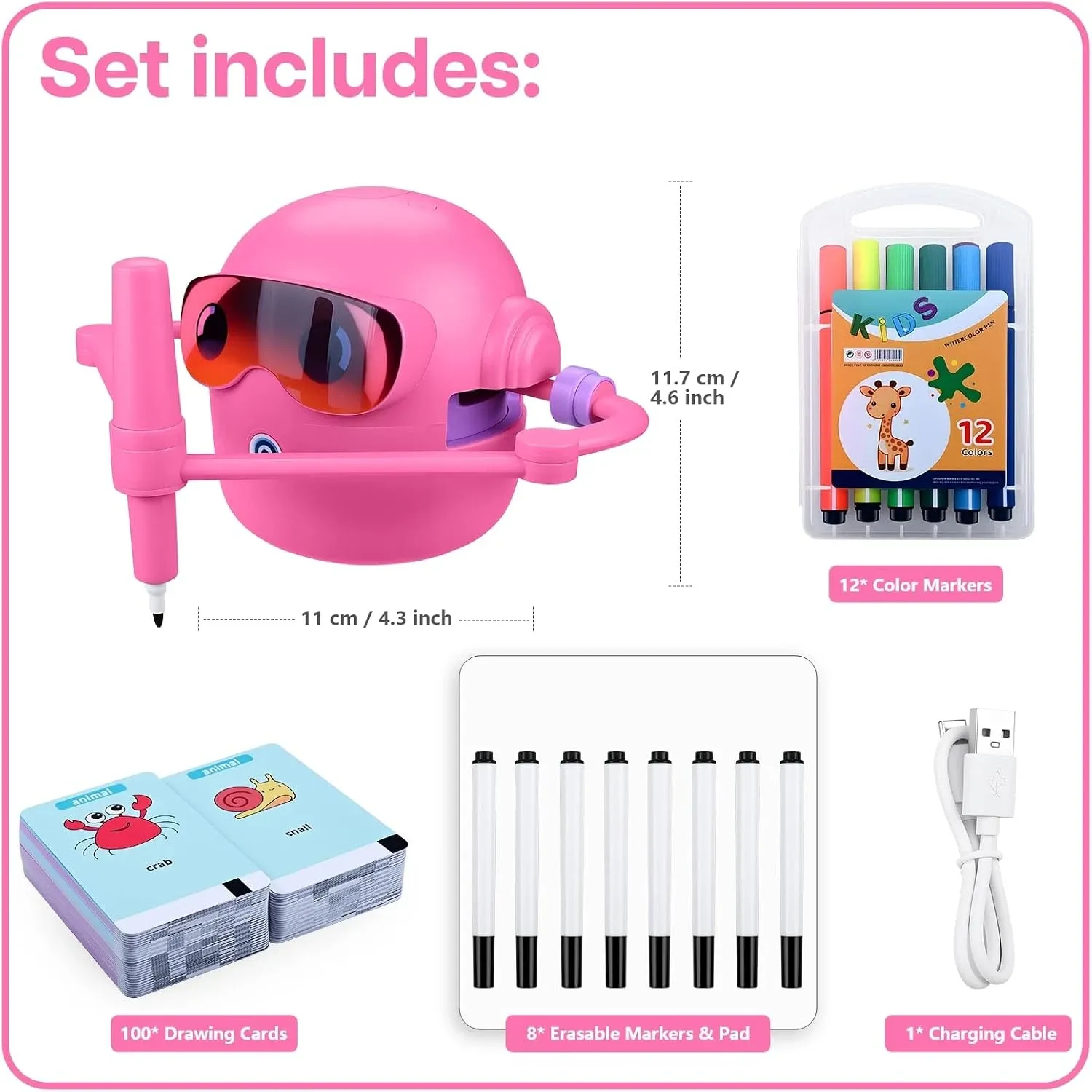
TL;DR: What is a doodle robot toy? A doodle robot toy is a small, motorised educational device that holds a pen and draws pictures step-by-step on paper. Designed to teach children how to draw, it breaks complex images into simple strokes and pauses for the child to copy them. Based on our testing at KidsDrawin, these screen-free toys significantly improve fine motor skills, hand-eye coordination, and creative confidence while adhering strictly to UK safety standards.
If you are wondering exactly what a doodle robot toy is, the answer is straightforward: it is a revolutionary educational device designed to return children to pen and paper whilst retaining the engaging magic of robotics. For parents navigating the modern educational toy market, finding tools that bridge the gap between technological innovation and traditional, tactile play is a significant challenge. Furthermore, the physical act of drawing is fundamental to early childhood development, yet children are increasingly drawn to passive, screen-based entertainment.
Consequently, a doodle robot toy is not merely a novelty; it is a pedagogical tool that breaks down complex illustrations into manageable, achievable strokes. By physically drawing alongside the child, these robots provide real-time scaffolding. As a result, they turn the often-frustrating experience of learning to draw into a collaborative, confidence-building journey. This guide explores the mechanics, developmental benefits, and UK safety standards surrounding doodle robot toys, providing parents and educators with everything they need to make an informed decision.
Key Takeaways
- Screen-Free Engagement: Doodle robot toys provide the interactivity of tech without the negative impacts of prolonged screen time, aligning perfectly with NHS physical development guidelines.
- Motor Skill Development: Following a robot's physical strokes significantly improves a child's fine motor control, grip strength, and hand-eye coordination.
- Cognitive Scaffolding: By breaking complex images down into simple lines, these toys teach sequencing, spatial awareness, and problem-solving.
- UK Safety Standards: Based on our compliance checks, authentic doodle robot toys must meet stringent UKCA marking and Toy Safety Regulations 2011 to ensure non-toxic materials and mechanical safety.
- Creative Confidence: Voice-guided instruction eliminates "blank page anxiety," empowering young artists to create independently.
What is a doodle robot toy and how does it work?
At its core, a doodle robot toy is a compact, motorised device equipped with a mechanical arm capable of holding a standard pen, pencil, or marker. Unlike remote-controlled cars or programmable coding bots, a doodle robot is purpose-built for artistic instruction. Specifically, it operates on a flat surface, translating digital algorithms into precise, physical pen strokes on a piece of paper.
Based on our hands-on testing at KidsDrawin, the operational mechanism usually involves scanning a proprietary card or selecting a pre-programmed design. Once activated, the robot draws the image line by line. Crucially, the robot pauses after each step, prompting the child to mimic the stroke on their own paper. Therefore, this interactive loop—watch, listen, draw, repeat—transforms the robot from a mere performer into an active, patient tutor.
For parents seeking a deeper understanding of the card-scanning mechanisms that power these devices, our comprehensive Drawing Robot With Cards Explained: A UK Buyer's Guide offers an in-depth look at how RFID and optical sensors facilitate this seamless learning experience.
Are doodle robot toys good for toddlers and children?
Yes, absolutely. The push towards screen-free educational alternatives is gaining unprecedented momentum across the United Kingdom. According to Ofcom’s 2023 Children and Parents: Media Use and Attitudes report, children aged 3 to 4 spend an average of 15 hours a week online, primarily consuming video content or playing digital games. Concurrently, the NHS recommends that children under five minimise sedentary screen time to support optimal physical and cognitive development.
Consequently, a doodle robot toy directly addresses this modern dilemma. It harnesses the appeal of a "gadget" but redirects the child's focus to the physical world. The tactile feedback of a pen dragging across paper cannot be replicated on a tablet screen. Furthermore, when a child uses a doodle robot, they are engaging multiple senses: they hear the mechanical whir and voice prompts, they watch the physical arm move, and they feel the friction of their own pen as they replicate the lines.
"Tactile play involving fine motor manipulation is irreplaceable in early childhood. Toys that encourage children to actively create rather than passively consume are vital for developing robust neural pathways."
How do drawing robots help a child's development?
Many children reach an age where they experience a crisis of creative confidence. They have an image in their head—a dinosaur, a castle, a dog—but lack the technical ability to translate that mental image onto paper. This often leads to frustration and the familiar refrain: "I can't draw." However, a doodle robot toy dismantles this barrier through a pedagogical concept known as scaffolding.
By breaking a complex final image into a series of highly achievable micro-steps, the robot demonstrates that drawing is just a sequence of basic shapes and lines. Accordingly, the child learns that a complicated elephant is merely a combination of circles, semi-circles, and sweeping curves.
Does a step-by-step drawing methodology work?
Indeed, the pacing of a doodle robot is its greatest asset. It does not rush. Instead, it completes a single component of the drawing and waits. Based on our evaluation of educational methodologies, this methodical approach teaches patience and sequencing—essential skills not just for art, but for mathematics and reading. To explore the pedagogy behind this method further, read our guide on the Step By Step Drawing Toy Explained: A UK Buyer's Guide.
Do doodle robots have voice-guided encouragement?
The most advanced doodle robot toys on the market incorporate auditory feedback. As the robot draws, it provides verbal cues, explaining what it is doing and offering encouragement. Moreover, this multi-sensory approach caters to different learning styles, particularly auditory learners who benefit from hearing instructions rather than just seeing them. Discover more about this technology in our dedicated resource: Voice Guided Drawing Robot Explained: A UK Buyer's Guide.
What are the physical benefits of a doodle robot toy?
Beyond the immediate joy of creating a picture, engaging with a doodle robot toy yields profound, long-term developmental benefits. According to UK Early Years Foundation Stage (EYFS) guidelines, the importance of physical development and expressive arts is heavily emphasised, both of which are directly supported by these devices.
Refining Fine Motor Skills
Holding a pen correctly requires the development of the pincer grasp—the coordinated use of the index finger and thumb. When a child follows a doodle robot, they are motivated to hold their pen for extended periods, building the intrinsic muscles of the hand. Consequently, this stamina is crucial for when they begin formal schooling in the UK and are required to write for longer durations.
Enhancing Hand-Eye Coordination
The child is required to continuously look between the robot's drawing and their own, thereby significantly strengthening their visual-motor integration and overall hand-eye coordination.
Ready to try KidsDrawin for screen-free creative play?
Shop Now — £41.66