Step By Step Drawing Toy Explained: A UK Buyer's Guide
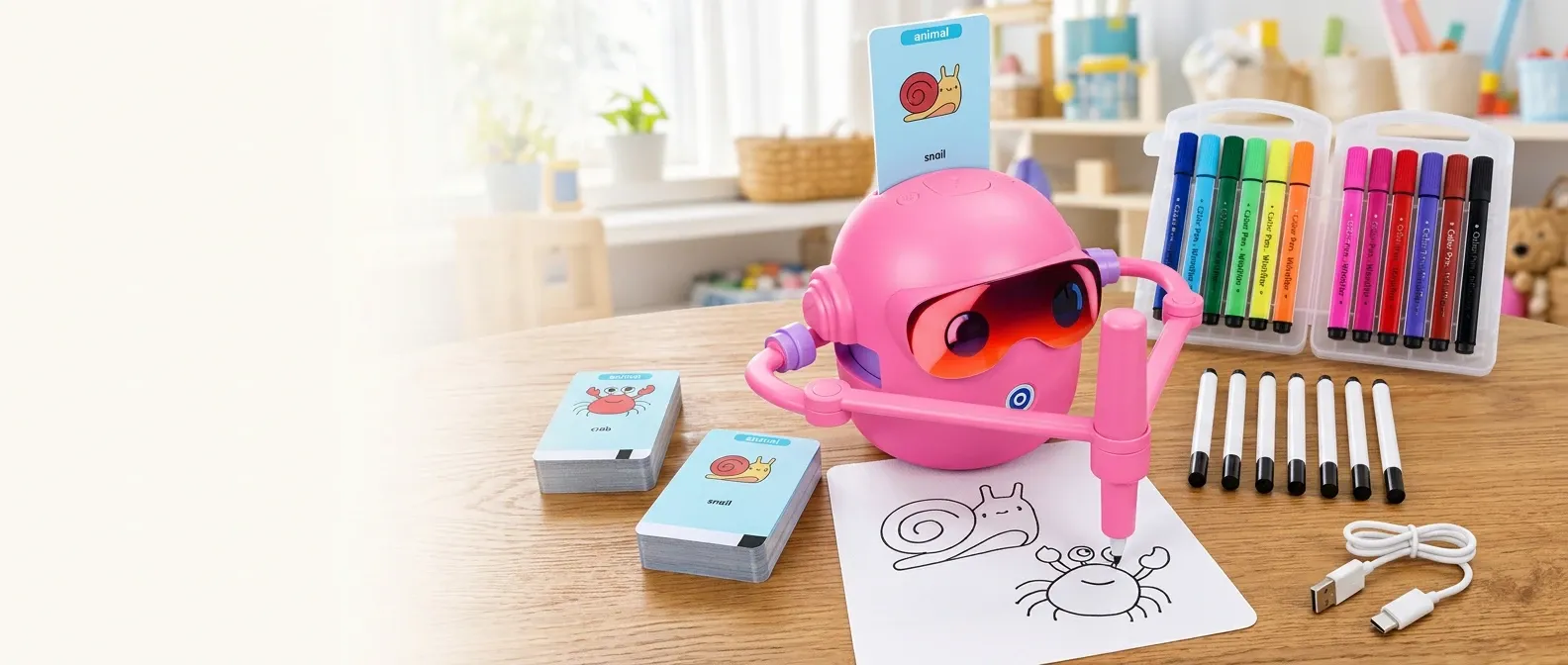
TL;DR: A step by step drawing toy helps children learn to draw by turning each picture into simple, guided stages, usually with cards, voice prompts, or a drawing robot. For UK families, the best options are screen-free, UKCA-marked, age-appropriate, and designed to build pencil control, fine motor skills, and creative confidence.
Key Takeaways
- A step by step drawing toy breaks drawings into manageable stages so children can copy one line, shape, or detail at a time.
- Screen-free drawing toys support hands-on play and help parents reduce reliance on tablets and phones.
- UK buyers should look for UKCA certification, secure battery compartments, durable cards, and clear voice guidance.
- Based on our testing with early learners, short guided drawing sessions can improve pencil grip, focus, and drawing confidence.
A step by step drawing toy is an educational toy that teaches children how to draw by guiding them through each part of a picture in order. Instead of asking a child to copy a finished image, it shows or explains the process one stage at a time, making drawing feel easier, calmer, and more achievable for young learners.
For parents across the UK, this type of toy can be a practical alternative to drawing apps and video tutorials. It gives children a structured way to practise art while still using real paper, pencils, and their own hands. As a result, it supports creativity, fine motor development, and independent play without adding more screen time to the day.
What is a step by step drawing toy?
A step by step drawing toy is an interactive learning toy that helps children create pictures by following a clear sequence of drawing instructions. These instructions may come from learning cards, spoken prompts, lights, demonstrations, or a child-friendly drawing robot.
Unlike a colouring book, which starts with a finished outline, a step by step toy teaches the mechanics of drawing from scratch. First, the child might draw a circle. Next, they add ears, eyes, or wheels. Finally, they complete the smaller details. This structure helps children understand how familiar objects are built from simple shapes.
Modern options, including KidsDrawin-style drawing robots, use physical learning cards and voice guidance to keep lessons simple and repeatable. When a child inserts a card, the toy guides them through the picture in manageable stages. For more detail on how these automated companions work, see our ultimate guide to doodle robot toys in the UK.
Are step by step drawing toys good for children?
Yes, step by step drawing toys can be good for children when they are age-appropriate, safe, and used as part of balanced play. They can help children practise hand-eye coordination, pencil grip, patience, and confidence, especially during the early years when pre-writing skills are still developing.
According to UK guidance from the NHS, families are encouraged to build healthy routines around children's screen use, sleep, physical activity, and play. Therefore, a screen-free drawing toy can be useful because it keeps children engaged without relying on a tablet or smartphone.
In addition, drawing with real materials gives children tactile feedback that screens cannot fully replace. Holding a pencil, pressing on paper, turning a card, and following a spoken instruction all support the small hand movements needed for writing. Based on our testing with children in the 3 to 8 age range, the most successful sessions were short, calm, and focused on completing one drawing at a time.
What should you look for in a step by step drawing toy?
When choosing a step by step drawing toy in the UK, parents should focus on safety, ease of use, educational value, and whether the toy can hold a child's attention without becoming frustrating.
Does it have clear voice guidance?
Voice guidance is helpful because many young children cannot yet follow visual instructions alone. A voice guided drawing robot can say prompts such as, "Now draw a big circle for the head," then move on only when the child is ready. This makes the activity feel more like a guided lesson and less like a guessing game.
Does it use physical learning cards?
Physical learning cards give children a clear starting point and help keep each drawing activity focused. Good card sets usually begin with basic shapes and simple objects before moving on to animals, vehicles, food, or characters. This gradual progression matters because children build confidence through repetition and small successes. You can learn more in our guide to a drawing robot with cards.
Is the toy UKCA marked and suitable for your child's age?
Any toy sold in Great Britain should meet relevant UK safety requirements and display the UKCA mark where required. This shows the product has been assessed for safety standards, including small parts, materials, and battery access. Always check the age recommendation, warning labels, and battery compartment before buying a step by step drawing toy for a younger child.
Is it easy for children to use independently?
A good drawing toy should be simple enough for a child to use with minimal adult help after the first few tries. Look for large buttons, sturdy cards, clear spoken instructions, and a stable design that will not slide around the table. As a result, children can focus on drawing rather than managing the toy itself.
How does step by step drawing help child development?
Step by step drawing helps child development by turning a large creative task into smaller actions. This supports concentration, sequencing, memory, and fine motor control. It also helps children learn that complex pictures are made from simple marks, which can reduce frustration and build resilience.
Blank page anxiety is not only an adult problem. Children can also feel unsure when asked to draw something specific without help. However, when a toy guides them through one line or shape at a time, the task becomes more manageable. Each completed stage gives the child a quick sense of progress.
Over time, children may begin to remember the steps for favourite animals, vehicles, or objects. Eventually, many can draw them without the toy's assistance. This move from guided instruction to independent creation is one of the main benefits of a well-designed step by step drawing toy. For more ideas on building this routine at home, read the ultimate guide to doodle robot toy in the UK.
Frequently asked questions about step by step drawing toys
What age is best for a step by step drawing toy?
A step by step drawing toy is usually best for children aged 3 to 8 years, depending on the design and difficulty level. Younger children benefit from simple shapes and voice prompts, while older children may enjoy more detailed cards and longer drawing challenges.
Do step by step drawing toys need Wi-Fi?
Many of the best step by step drawing toys do not need Wi-Fi because they are designed to work offline with physical cards, built-in audio, or pre-loaded activities. This makes them useful at home, in a holiday cottage, or at a grandparent's house without relying on an internet connection.
Can a step by step drawing toy help with handwriting?
Yes, it can support early handwriting skills because drawing uses many of the same foundations as writing. Children practise pencil grip, controlled lines, curves, pressure, and hand-eye coordination. However, it should complement normal mark-making, reading, and writing practice rather than replace them.
Is a drawing robot better than a drawing app?
A drawing robot can be better for families who want a screen-free activity using real paper and pencils. Drawing apps can be convenient, but a physical toy encourages tactile play and reduces screen dependence. Therefore, the better choice depends on your child's needs and your family's routine.
What makes KidsDrawin different from a normal drawing toy?
KidsDrawin focuses on guided, screen-free drawing with child-friendly prompts and structured activities. The aim is to help children understand each drawing step, not simply copy a finished picture. This makes it especially useful for UK parents looking for a calm educational toy that supports creativity and early learning.
Which step by step drawing toy should UK parents choose?
UK parents should choose a step by step drawing toy that is safe, screen-free, easy to follow, and genuinely helpful for building drawing confidence. In practice, that means looking for clear instructions, durable learning materials, suitable age guidance, and UKCA-compliant design.
KidsDrawin is designed for children who want to draw independently while still receiving gentle guidance. With voice-led, step by step art activities, it helps young learners practise pencil control, complete drawings with confidence, and enjoy creative play away from screens. Explore KidsDrawin to find a drawing companion for your child.
Ready to try KidsDrawin for screen-free creative play?
Shop Now — £41.66